How to Make Hibiscus Tea: Hot Hibiscus Tea Recipe From Dried Flowers
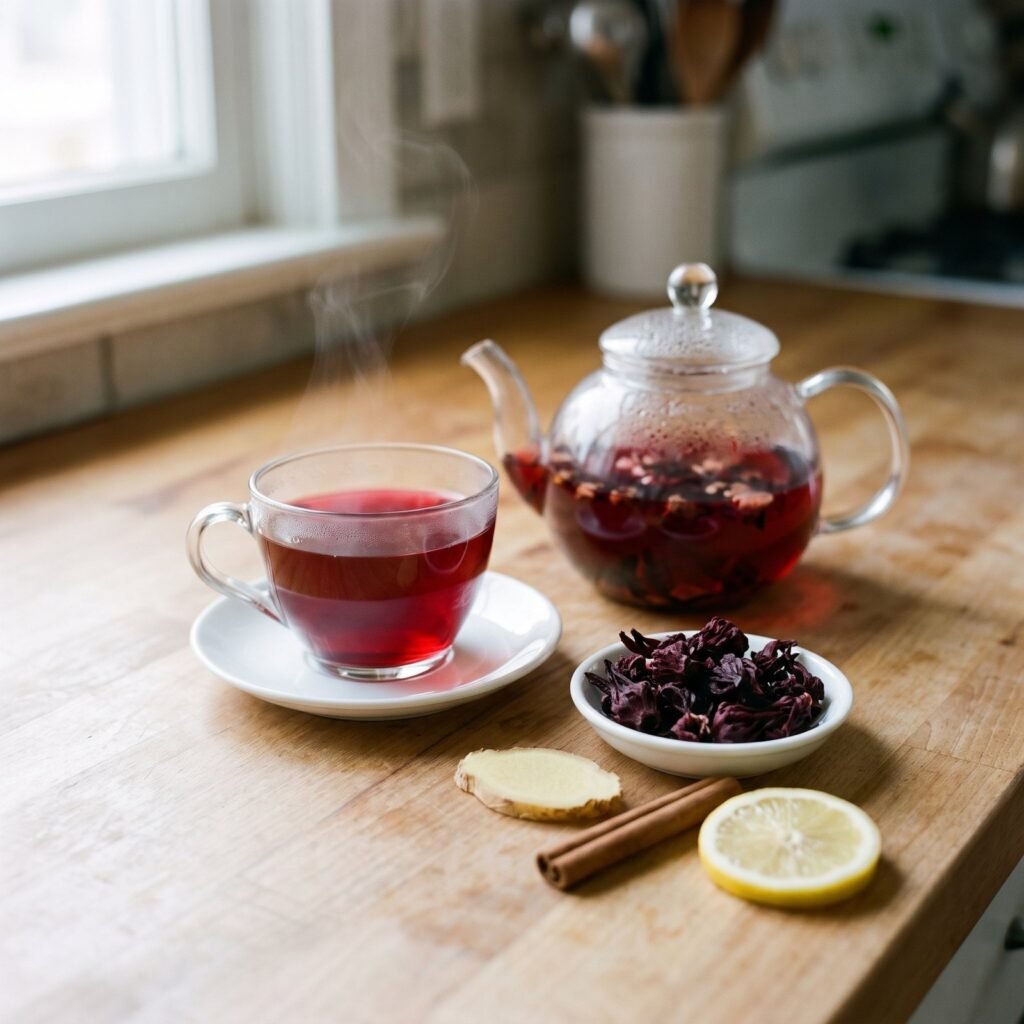
To make hibiscus tea, pour 500 ml of boiling water over 10 g of dried hibiscus flowers, cover, and steep for 10 to 15 minutes, then strain. You get about 2 cups of deep red, tart, caffeine-free tea, and the same flowers make it iced.
Key takeaways
- Use 10 g of dried hibiscus for 500 ml of boiling water. That makes about 2 cups of strong, deep red tea.
- Steep 10 to 15 minutes for a strong cup, or 5 to 7 minutes for a lighter one, then strain.
- Hibiscus tea is a caffeine-free herbal tea made from the dried calyces of the roselle plant, not from tea leaves.
Here is our hot hibiscus tea recipe, step by step.
Hot hibiscus tea
- Makesabout 2 cups (500 ml)
- Hands-on5 minutes
- Steep15 minutes
- Keeps3 days in the fridge
Ingredients
- 10 g dried hibiscus flowers (whole flowers are light and bulky, so a kitchen scale is best)
- 500 ml (about 2 cups) water
- 2 or 3 thin slices fresh ginger (optional)
- 1 small cinnamon stick (optional)
- 1 teaspoon honey (optional)
- A slice of lemon (optional)
Method
- Bring the water to a boil in a kettle or small pan.
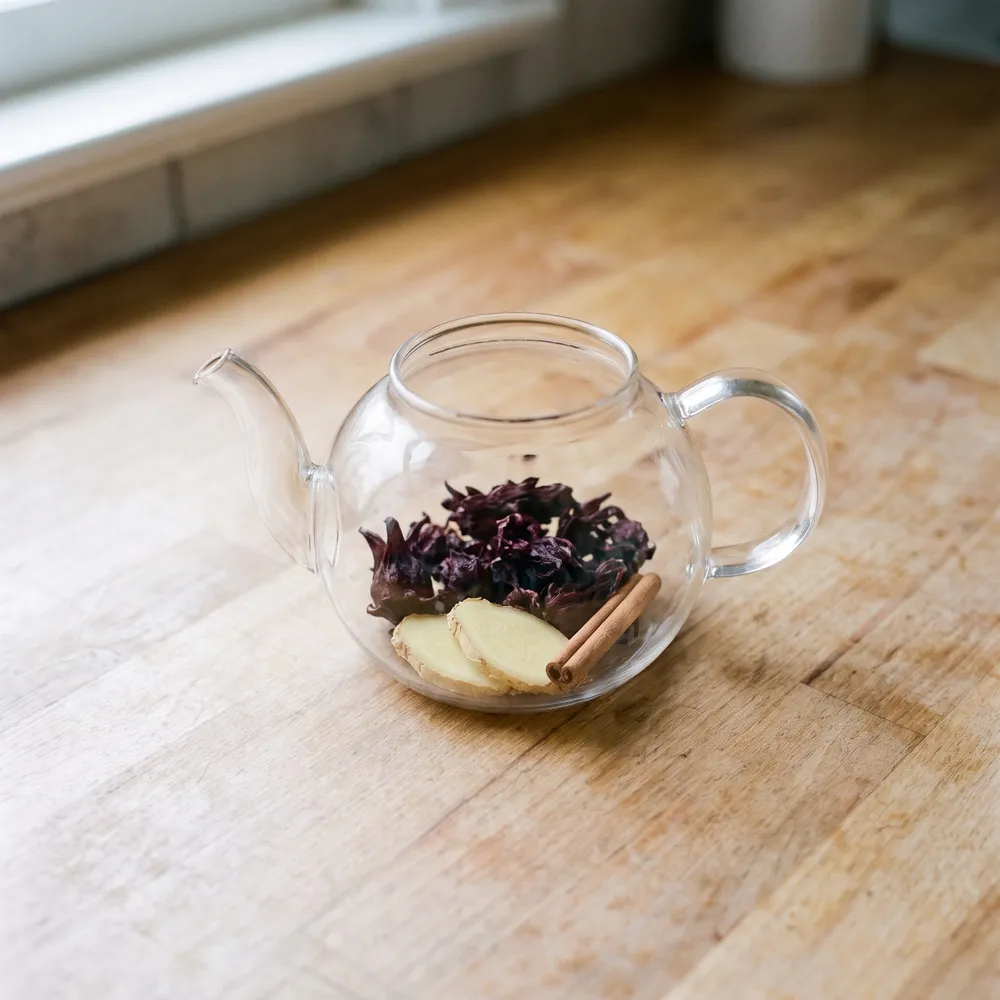 Put the dried hibiscus in a teapot or heatproof jug, with the ginger and cinnamon if you are using them.
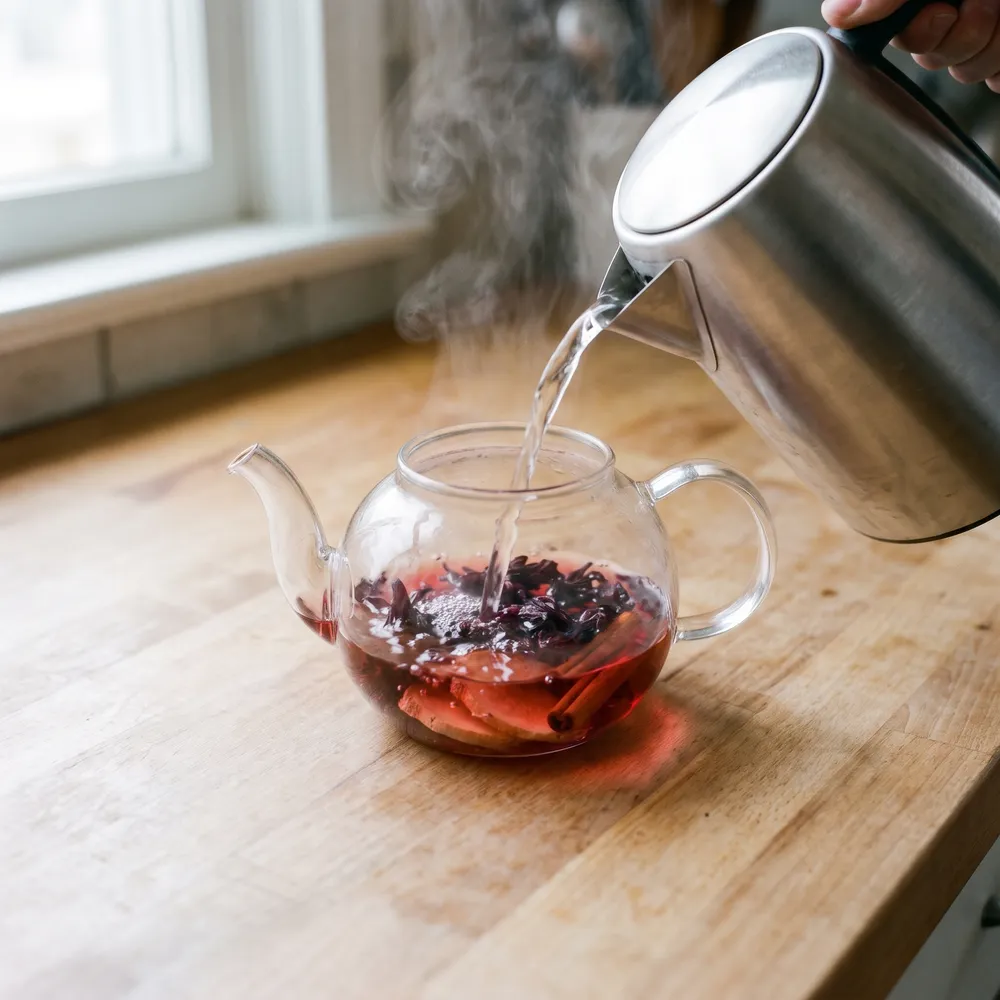 Pour the hot water over the flowers, cover, and steep for 10 to 15 minutes. For a lighter cup, steep 5 to 7 minutes.
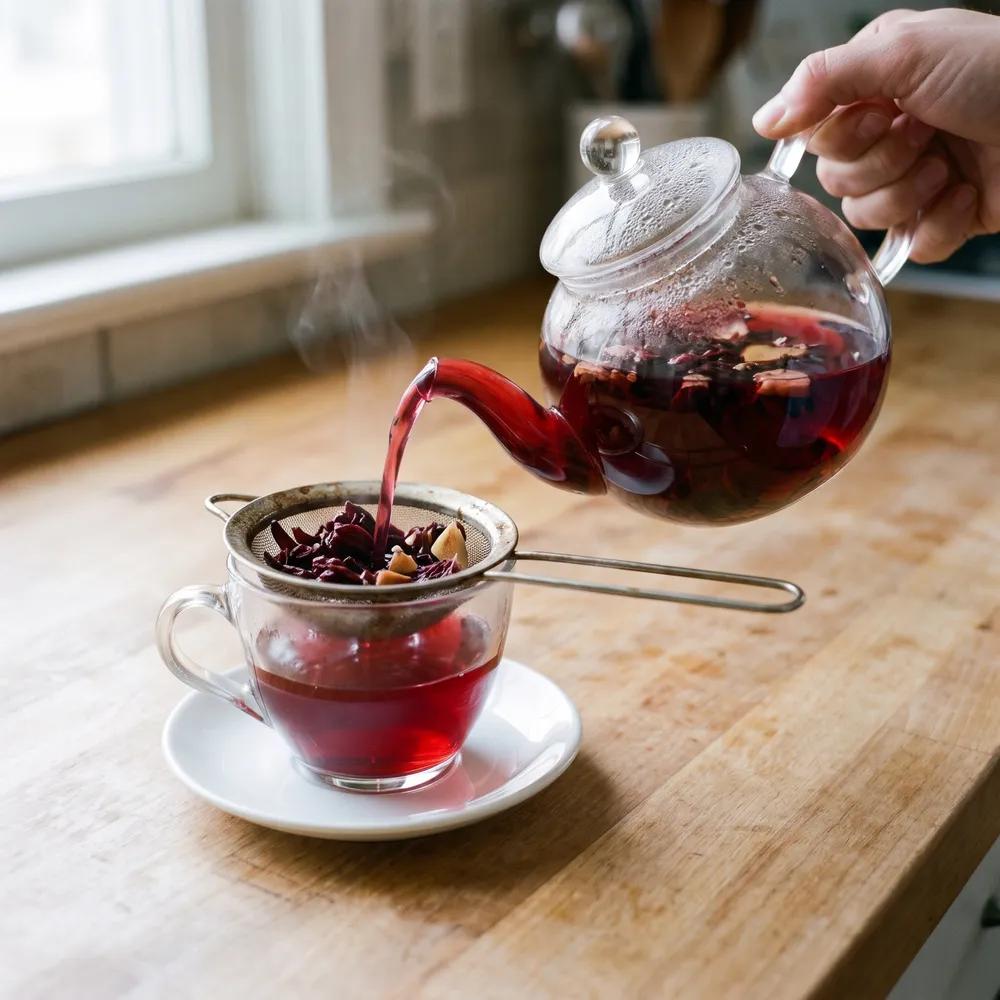 Strain the tea into cups.
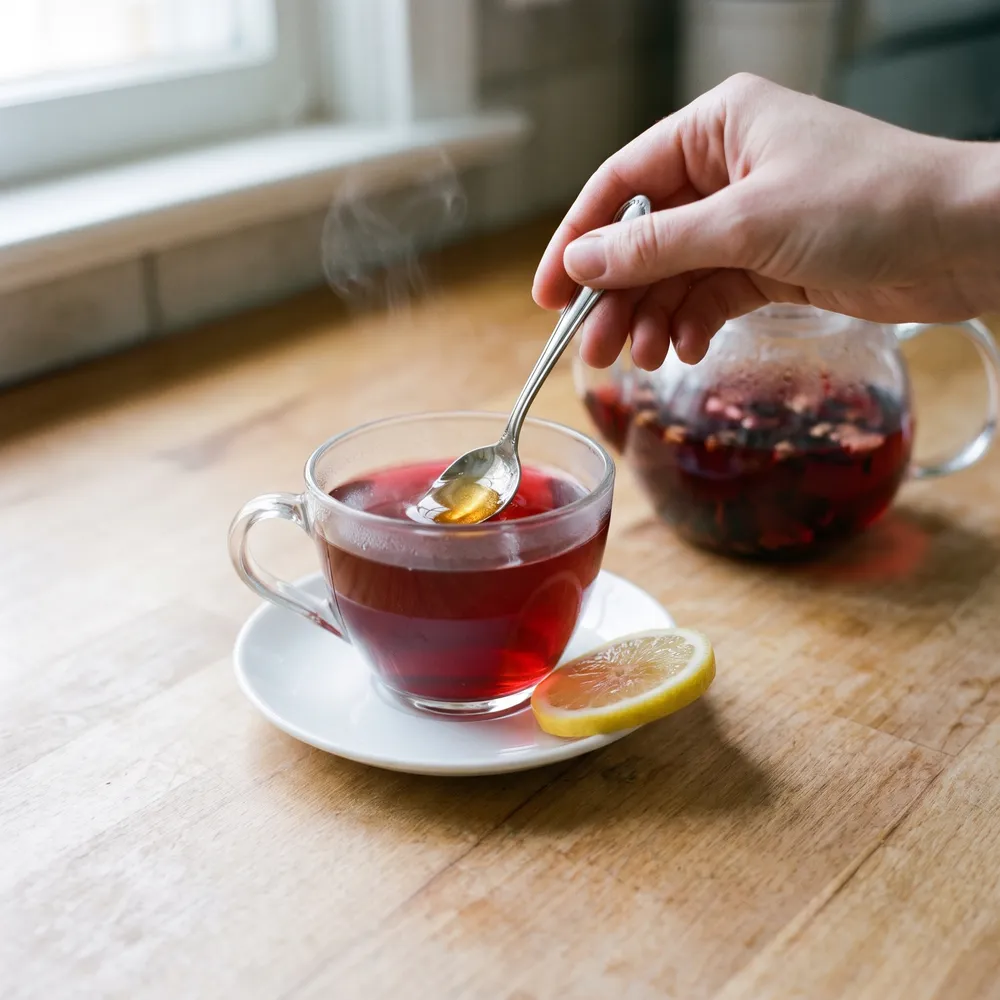 Let it cool for a minute, then stir in honey or lemon to taste. Serve warm, not scalding.
This is how our family makes it: a strong cup. If it tastes too sharp, add a little hot water.
The step pictures are illustrations.
What is hibiscus tea?
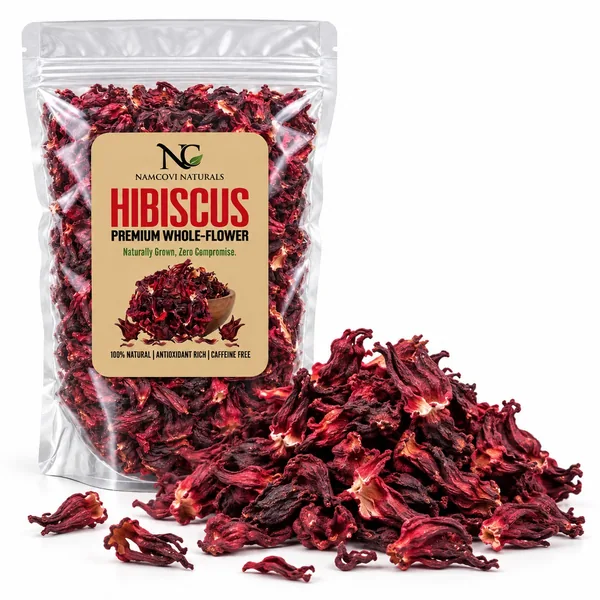
Hibiscus tea is made from the dried red calyces of the roselle plant, Hibiscus sabdariffa. The calyces are the fleshy cups that hold the flower, and they give the tea its color and its tart, cranberry-like flavor.
People also call it hibiscus flower tea, though what goes in the pot is the calyx, not the petals. Clemson University’s extension service calls the drink a hibiscus tisane, the proper name for an herbal tea.
It is not made from the tea plant at all. The Harvard T.H. Chan School of Public Health explains that herbal teas are not made from the Camellia plant and are naturally caffeine-free (The Nutrition Source). The USDA food database lists brewed hibiscus tea at 0 calories and 0 mg of caffeine, a figure it marks as assumed rather than measured (FoodData Central).
How much dried hibiscus do you need for a cup?
Recipes disagree more than you might expect, mostly because they measure in spoons. A spoonful of whole dried flowers weighs far less than a spoonful of cut ones, so the same tablespoon can give a weak or a strong cup.
Here is what published hibiscus tea recipes use, worked out per litre of water so they can be compared:
| Recipe | As written | Dried hibiscus per litre | Steep |
|---|---|---|---|
| Our recipe | 10 g in 500 ml | 20 g | 10 to 15 minutes |
| Clemson Extension | 30 g in 4 cups | about 32 g | 4 minutes |
| Valley of Tea | 3 to 5 g in 250 ml | 12 to 20 g | 5 to 7 minutes |
| Sunset Magazine | 1 1/2 oz in 3 quarts | about 15 g | simmered 15 minutes |
| Love and Lemons | 1 tablespoon per cup | about 5 to 11 g | 5 minutes |
So 20 g per litre is a strong cup, at the top of the usual range. For a lighter tea, use half as much. Weighing is the easy way to get the same cup every time.
Should the water be boiling?
Boiling or just below it both work. Valley of Tea brews at a full boil, 100 °C, and says hibiscus handles it without trouble. The Mediterranean Dish steeps its Egyptian karkade in water just below boiling, about 200 °F (Karkade recipe).
We pour it straight from the boil and cover the pot, so the tea stays hot while it steeps.
How long should you steep hibiscus tea?
For a single cup, most recipes steep for about 5 minutes. Valley of Tea says 5 minutes gives a lighter tea and 7 minutes a deeper red, more tart one. Our 10 to 15 minutes makes a strong cup, which is how our family likes it.
Does a long steep make it bitter? Tea makers disagree. Starwest Botanicals warns that over-steeping can make it bitter, while tea sommelier Jee Choe says hibiscus does not get overly bitter past 5 minutes. The simple answer is to taste it at 5 minutes and strain it when you like it.
Hot or iced: what is the difference?
Hot water simply works faster. In a University of Florida study, 16 minutes in water at 90 °C drew out as much of the red color as 4 hours in water at room temperature (Ramirez-Rodrigues and others, 2011).
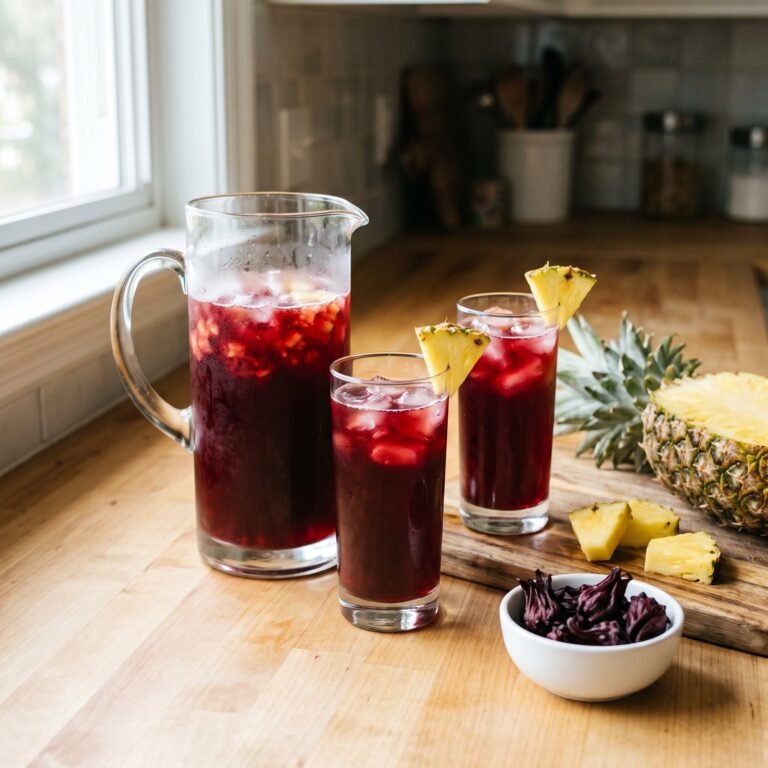
So hot brewing is quick, and cold brewing takes hours. Either way, you can serve it how you like. For hibiscus iced tea, let the brewed tea cool, chill it, and pour it over ice. Sunset Magazine serves the very same brew hot or cold (Sunset).
What can you add to hibiscus tea?
- Ginger. A few thin slices in the pot add warmth. This is how we make it at home.
- Cinnamon. Sunset simmers a small cinnamon stick with the flowers, and Love and Lemons offers it as a variation.
- Honey or sugar. Add it after straining, once the tea has cooled for a minute, and taste first.
- Lemon or lime. A squeeze brightens the tart flavor. The Mediterranean Dish finishes its karkade with lemon or lime and a little honey.
How long does hibiscus tea keep?
It is best fresh. If you make extra, let it cool, cover it and put it in the fridge within 2 hours, then drink it within 3 days. The USDA says a fridge should be at 40 °F (4 °C) or below and that cooked leftovers should be used within 3 to 4 days (Food Safety Basics).
Is hibiscus tea the same as zobo or agua de Jamaica?
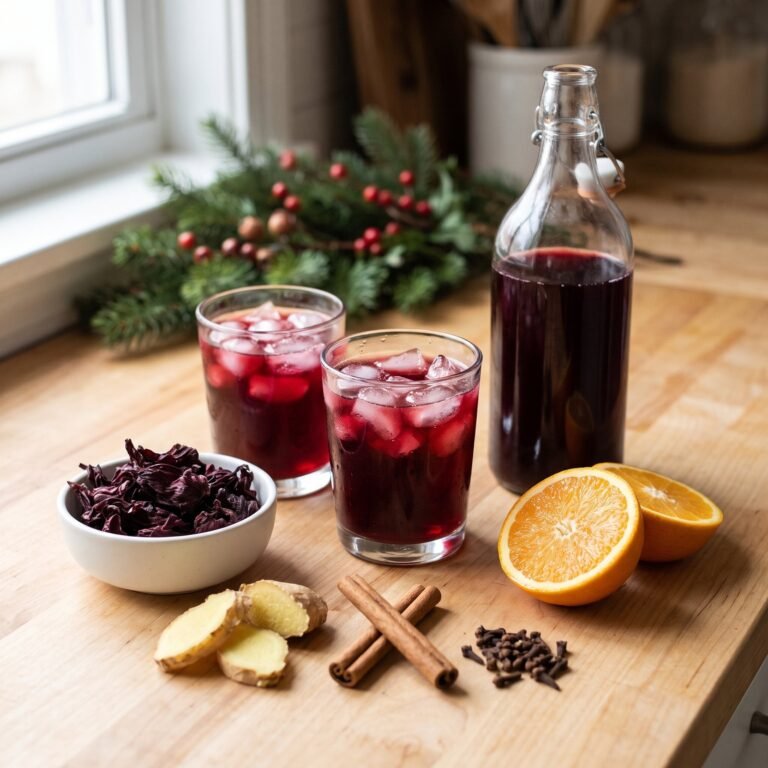
It is the same flower, made different ways. In Egypt the hot or chilled tea is called karkade. In Nigeria the cold, spiced drink is zobo. In Mexico it is agua de Jamaica, and in the Caribbean it is the Christmas sorrel drink. All of them start with dried hibiscus.
Common questions
Does hibiscus tea have caffeine?
No. Hibiscus is not the tea plant, and the USDA lists brewed hibiscus tea at 0 mg of caffeine.
Why does my hibiscus tea taste too sour?
It is probably strong. Use less dried hibiscus, steep it for 5 minutes instead of 15, or add a little hot water and honey.
Can I make hibiscus tea with cold water?
Yes, but it is slow. Cold water takes hours to draw out the same color that boiling water gives in about 15 minutes.
What does hibiscus tea taste like?
Tart and fruity, a little like cranberry, with a deep red color. Honey or a slice of lemon rounds it out.
Sources
- Clemson Cooperative Extension, "Hibiscus Ginger Tea", Adair Hoover, June 22, 2022. hgic.clemson.edu
- The Nutrition Source, "Tea", Harvard T.H. Chan School of Public Health. nutritionsource.hsph.harvard.edu
- USDA FoodData Central, "Beverages, tea, hibiscus, brewed", record 171946. fdc.nal.usda.gov
- Valley of Tea, "How to Make Hibiscus Tea: 4 Methods", March 24, 2026. www.valleyoftea.com
- Sunset Magazine, "Hibiscus Tea". www.sunset.com
- Love and Lemons, "How to Make Hibiscus Tea", updated August 26, 2024. www.loveandlemons.com
- The Mediterranean Dish, "Hibiscus Tea Recipe (Karkade)", Suzy Karadsheh, updated June 23, 2026. www.themediterraneandish.com
- Starwest Botanicals, "The Complete Guide To Making Hibiscus Tea", August 25, 2023. www.starwest-botanicals.com
- Oh, How Civilized, "Tea Sommelier's Hibiscus Tea Recipe", Jee Choe, February 6, 2026. www.ohhowcivilized.com
- Ramirez-Rodrigues and others, "Physicochemical and phytochemical properties of cold and hot water extraction from Hibiscus sabdariffa", Journal of Food Science, 2011. pubmed.ncbi.nlm.nih.gov
- USDA Food Safety and Inspection Service, "Keep Food Safe! Food Safety Basics", updated January 5, 2024. www.fsis.usda.gov
Researched and checked by the Namcovi Naturals team on November 19, 2026.
Have a question about this recipe?
Ask us and a real person will answer.