Moringa Powder vs Moringa Tea: Which Should You Use?
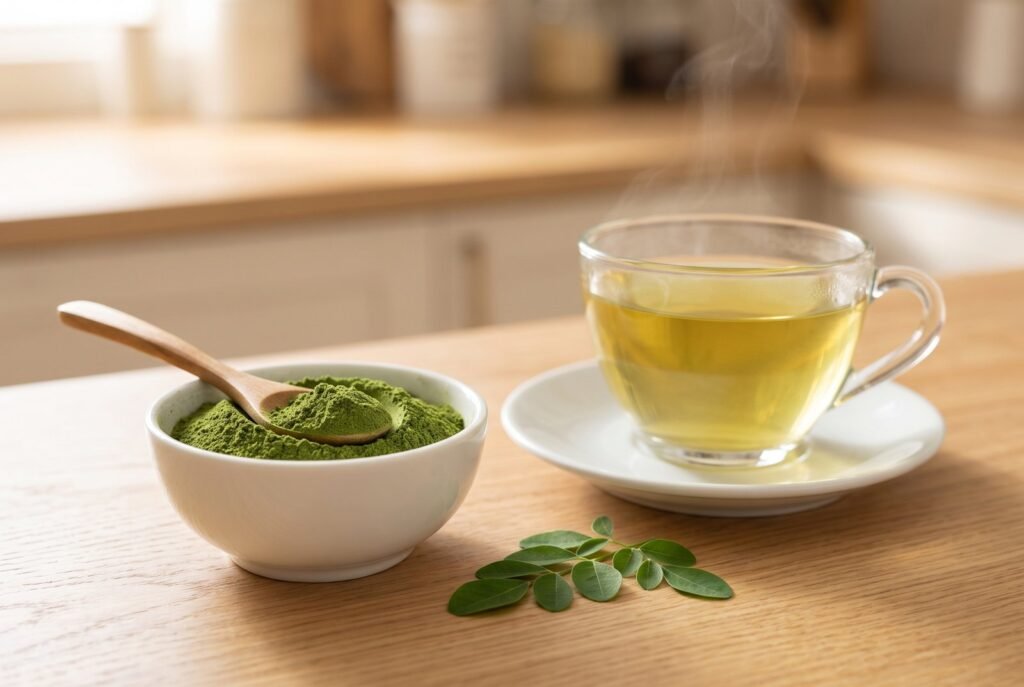
Moringa powder and moringa tea come from the same leaf, but you get very different things from them. Moringa powder is the dried leaf ground fine, and you eat all of it. Moringa tea is the dried leaf steeped in hot water, then taken out, so you drink only the part that dissolves. In one test, that part was just 4 to 5% of the leaf’s weight (2023 study). Here is how the two compare, and how to use each one.
Key takeaways
- Moringa powder is the whole dried leaf, ground fine, so you eat all of it. Moringa tea is the leaf steeped in hot water and then taken out.
- In one test, only 4 to 5% of the leaf's weight dissolved into a cup of moringa tea (2023 study).
- Choose powder to add the whole leaf to food and smoothies. Choose tea for a light, warm, caffeine-free cup.
Moringa powder vs moringa tea at a glance
| What | Moringa powder | Moringa tea |
|---|---|---|
| What it is | Dried moringa leaf, ground fine | Dried moringa leaf pieces or tea bags, steeped in hot water |
| What you take in | The whole leaf | Only what dissolves: 4 to 5% of the leaf’s weight in one test (2023 study) |
| A usual amount | 2 teaspoons, about 3 to 4 g, on two brands’ labels (USDA label records) | One tea bag (1.5 g on one brand’s label), or 1 to 3 g of leaf, in one cup (USDA label record) |
| Taste | Fresh, grassy and gently earthy | Somewhat astringent, aromatic and green, with almost no bitterness (2023 study) |
| Best for | Smoothies, yogurt, oatmeal, soups and baking | A warm cup, or iced tea |
| Caffeine | None | None in pure moringa (check blends) |
What is moringa powder?
If you are new to the plant, our post on what is moringa explains the tree and the leaf. Moringa powder is the moringa leaf, dried and ground until it is fine and smooth. Because nothing is strained out, a spoonful of powder is a spoonful of moringa leaf.
Drying takes the water out, so the powder is far richer by weight than the fresh leaf. One laboratory measured moringa leaf powder at 28.1% protein and 19.6% fiber (2015 study). The USDA lists 9.4 g of protein in 100 g of fresh moringa leaf, which is mostly water.
How to use moringa powder
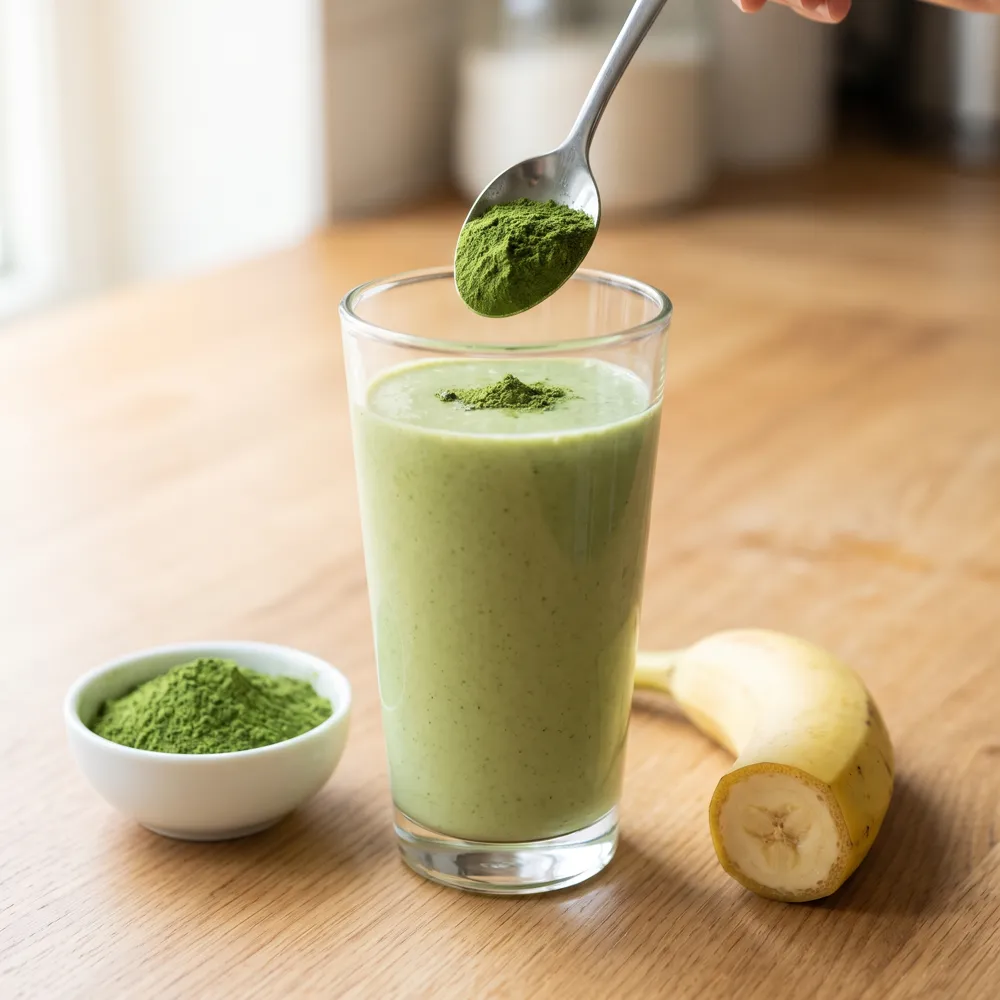
The easy way is to stir it into something you already eat or drink. Start with about half a teaspoon and adjust to taste.
- Smoothies: blend it with banana, mango or pineapple, which balance the grassy taste.
- Yogurt and oatmeal: stir it in with a little honey or fruit.
- Water or juice: shake it in a closed bottle so it does not clump.
- Soups, sauces and dips: stir it in at the end of cooking.
- Baking: add a spoonful to pancakes, muffins or bread dough for a green color.
Memorial Sloan Kettering Cancer Center notes that people mix moringa powder with liquids and drink it (MSK, About Herbs).
What is moringa tea?
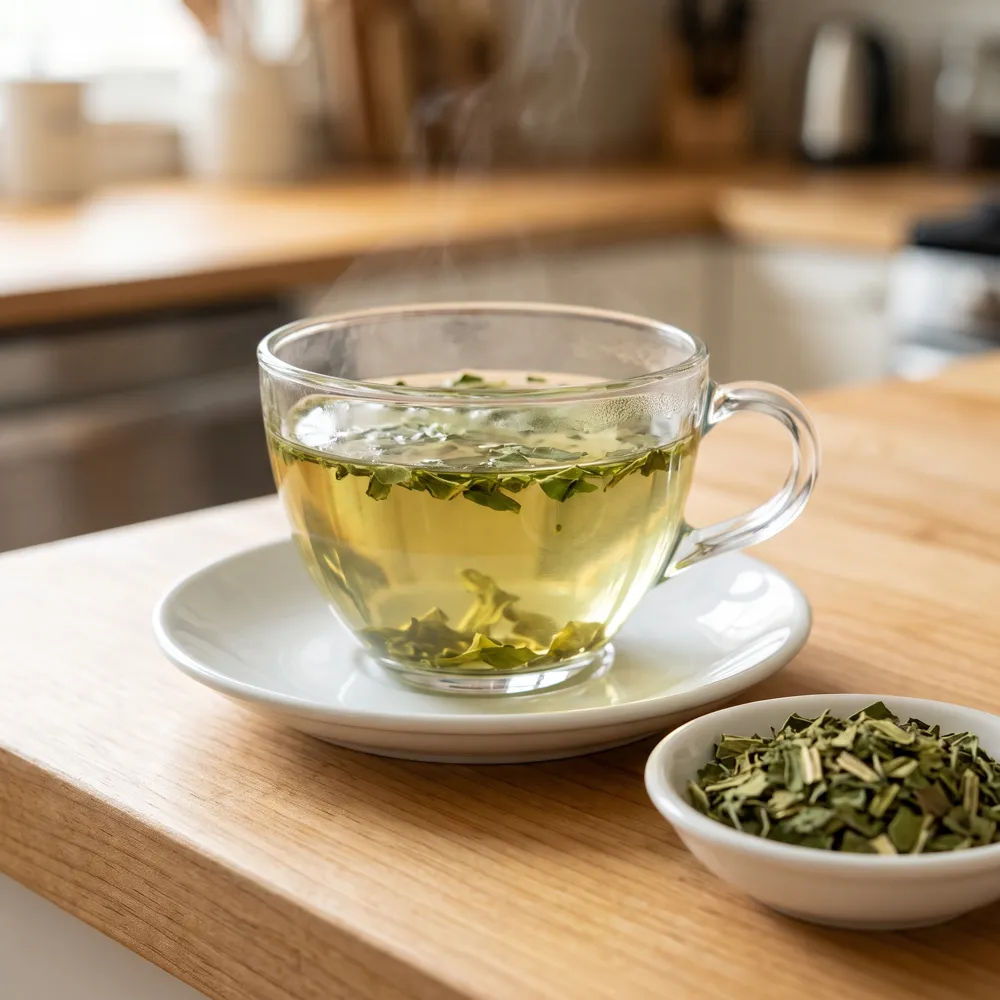
Moringa tea is made by steeping dried moringa leaf, either as cut and sifted leaf pieces or in tea bags, in hot water. When the tea is ready, the leaf or the bag comes out. What is left in the cup is the part of the leaf that dissolved in the water, which is why moringa tea is light and easy to drink.
One 2023 study brewed five store-bought moringa products, 1 g of leaf in 250 mL of water at 100 °C for 5 minutes, and found that the dissolved part was 4 to 5% of the leaf’s weight (2023 study). The rest of the moringa leaf stays behind in the bag or strainer.
How to make moringa tea
These amounts come from the published moringa tea studies, which used 1 to 3 g of dried leaf for each cup of water just off the boil, steeped for 3 to 10 minutes (2015 study, 2023 study).
- Put 1 moringa tea bag, or 1 teaspoon of cut and sifted moringa leaves, in a cup.
- Pour in 1 cup of water that has just boiled.
- Steep for 5 minutes. Steep up to 10 minutes for a stronger cup.
- Take out the bag, or pour the tea through a strainer.
- Drink it plain, or add honey, lemon or fresh mint.
Moringa tea also mixes well with other herbal teas. Try it with hibiscus tea for a deep red, tart cup.
Hot or cold brewed moringa tea?
Hot water pulls more out of the leaf. A study that brewed 3 g of moringa leaf in 200 mL of water found about 60% more plant compounds called phenolics in a hot brew (98 °C for 10 minutes) than in a cold brew (25 °C for 24 hours) (2023 study).
The cold brew kept more of the fresh aroma, though (2023 study). For a mild iced moringa tea, put the leaves in cold water in the fridge overnight, then strain.
What do moringa powder and moringa tea taste like?
Moringa powder tastes fresh, grassy and gently earthy, a little like matcha or spinach. Moringa tea is lighter. Tasters in one study found it “somewhat astringent, aromatic, and green with almost no bitterness”, with herbal, grassy and floral smells (2023 study).
In another study, moringa tea drinkers liked sweet and floral notes and disliked a strong grassy flavor and bits settling in the cup (2023 study). A little honey, and a strainer or tea bag, take care of both.
Does moringa tea have caffeine?
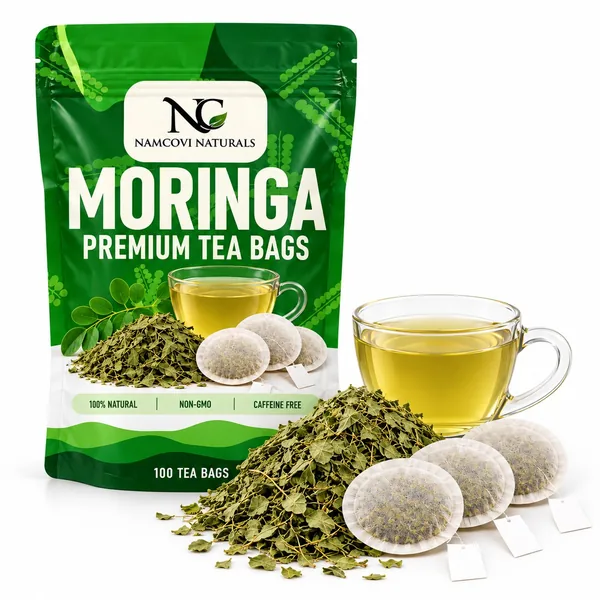
No. Pure moringa leaf has no caffeine, so moringa powder and moringa tea are both caffeine free and fine for the evening. One thing to check: some store-bought moringa teas are blended with black or green tea, which do have caffeine (USDA label record). Read the ingredients. A pure moringa tea lists only moringa leaf.
Moringa powder vs moringa tea: which should you use?
- Choose moringa powder if you want the whole moringa leaf in your food, and you like adding things to smoothies, yogurt, oatmeal or soups.
- Choose moringa tea if you want a light, warm, caffeine-free drink to sip, morning or night.
- Use both if you like a spoonful in your breakfast and a cup of tea later in the day.
Who should be careful
Memorial Sloan Kettering Cancer Center says it is generally safe to eat moringa leaves and to drink moringa powder mixed with liquids (MSK, About Herbs). It also says to talk with your healthcare provider if you are pregnant or breastfeeding, because moringa may not be safe for you (MSK, About Herbs). If you take medication, ask your healthcare provider first, because moringa supplements can interact with some medications (MSK, About Herbs). On moringa powder side effects, the same page says side effects have not been reported in its patient information (MSK, About Herbs).
This page is general information, not medical advice.
Common questions
Is moringa powder the same as moringa tea?
No. Both are made from the dried moringa leaf, but powder is the whole leaf ground fine, while tea is the leaf steeped in hot water and then taken out.
Can I make moringa tea with moringa powder?
Yes. Stir about half a teaspoon of powder into a cup of hot water. The powder does not dissolve, so you drink the whole leaf, and the cup is thicker and greener than tea made from leaves or a tea bag.
How long should I steep moringa tea?
About 5 minutes in water that has just boiled, or up to 10 minutes for a stronger cup. Published studies used 3 to 10 minutes (2023 study).
Does moringa tea have caffeine?
No. Pure moringa leaf has no caffeine. Some store blends add black or green tea, so check the ingredients.
What does moringa tea taste like?
Light, green and a little herbal, with almost no bitterness (2023 study). Honey, lemon or mint go well with it.
Sources
- Rodrigues and others (2023), "Moringa oleifera Lam. Commercial Beverages: A Multifaceted Investigation of Consumer Perceptions", Foods 12(11):2253. pmc.ncbi.nlm.nih.gov
- Oussou and others (2023), "GC-MS-Olfactometric Characterization of Volatile and Key Odorants in Moringa and Kinkeliba Herbal Tea Infusions Prepared from Cold and Hot Brewing", Separations 10(1):10. www.mdpi.com
- Ilyas and others (2015), "Antioxidant potential and nutritional comparison of moringa leaf and seed powders and their tea infusions", Journal of Animal and Plant Sciences 25(1):226-233. thejaps.org.pk
- United States Department of Agriculture, FoodData Central, "Drumstick leaves, raw" (record 168416). fdc.nal.usda.gov
- USDA FoodData Central, branded foods, "Moringa powder" (record 2410355, a brand's own label). fdc.nal.usda.gov
- USDA FoodData Central, branded foods, moringa tea bags (record 700602, a brand's own label). fdc.nal.usda.gov
- USDA FoodData Central, branded foods, a moringa tea blended with black tea (record 2148787, a brand's own label). fdc.nal.usda.gov
- Memorial Sloan Kettering Cancer Center, About Herbs, "Moringa oleifera" (updated May 23, 2025). www.mskcc.org
Researched and checked by the Namcovi Naturals team on November 25, 2026.
Have a question about this post?
Ask us and a real person will answer.